Strategy

The ERIKS group took various types of action and initiated and completed various projects in 2007 in line with the plans outlined under ‘Key objectives for 2007’ in the 2006 annual report. These are described in more detail in ‘Review of 2007’ and ‘Developments per cluster’ of the Annual report. The ERIKS group strengthened its position as European market leader in 2007 in conformity with its defined objectives and strategy. The market positions of our specialised companies in the ERIKS USA and ERIKS South-east Asia clusters have also improved.
In order to achieve the group’s objectives, and taking into account the conclusions that can be drawn from external and internal analyses, we have categorised our strategy spearheads as follows:
Organic growth
We can only grow organically if the way we conduct business is focused on meeting our customers’ wishes and if the ERIKS group has a distinct edge over its competitors. This will require the clusters and group companies to adopt an innovative and flexible stance in order to identify developments in the market, adapt their ranges of products and services accordingly and be willing to collaborate with each other. A precondition in this context is to increase and maintain the level of the six know-how domains described in this report. This will allow us to enter new market segments and make it possible to develop and maintain a marketing mix for each type of customer.
It is essential that the ERIKS group should have a modern infrastructure in order to guarantee adequate, efficient and modern services to its customers and also to remain attractive to its employees.
Further development of the twin business model is of prime importance for the growth of the ERIKS group in Europe. This tried and tested model has been most fully developed in the ERIKS Netherlands and ERIKS Belgium clusters, but important advances have also been made and continue to be made in the ERIKS Germany, ERIKS UK and ERIKS Central Europe clusters. The ERIKS France, ERIKS USA and ERIKS South-east Asia clusters fulfil the role of specialised distributors in one or more product groups. These positions will also be extended in the coming years.
Important aspects in the development of the twin business model are:
Entrepreneurship and management development
In a highly decentralised organisational structure with a matching decision-making process, our achievement of growth hinges on our employees having a strong sense of entrepreneurship. This requirement is always addressed in the selection and supervision of employees in our organisation. To control our growth, it is essential for us to retain experienced and good management in the years ahead. The ERIKS group has a Management Development Programme in place.
KNOW-HOW – Well-trained employees
The six know-how domains must be present in all group companies and in their core activities. This enables ERIKS employees to work permanently on modernising the range of services and allows them to correctly interpret the changing needs of our customers and translate them into appropriate recommendations and services. In close consultation with our manufacturers, our employees also contribute to the development of new products.
Monitoring and where necessary improving the level of know-how (part of the operational plan in all group companies) occurs through internal and external training programmes, through contact with schools and training organisations and also by recruiting new employees.
Broad and deep range of products and services
The ERIKS Netherlands and ERIKS Belgium clusters possess a broad and deep range of products and services and serve both the OEM market and the maintenance market in defined segments. Professional product management ensures that the range is adapted to meet the market’s demands.
The ERIKS Germany, ERIKS UK and ERIKS Central Europe clusters do not have all of the defined core activities and associated product groups in their ranges. As in previous years, the range will be extended in the coming years by means, where possible, of organic growth or otherwise by means of acquisitions.
ERIKS will invest in product management and the market strategy will also be organised in such a way that both the OEM market and the maintenance market can be served.
Where possible, products will be extended under our private label. These products now account for about 15 percent of sales and the objective is to increase this to 30 percent.
In the ERIKS France cluster, the activities of the Trappes branch (near Paris), which is a specialist distributor of a range of valves, industrial hoses and sealing technology, will be expanded.
The ERIKS USA cluster will continue to invest in the development of its range of sealing technology and industrial plastics, and will expand its market area via organic growth and acquisitions.
The activities of the ERIKS South-east Asia cluster in Singapore and Malaysia will concentrate primarily on further development of the valves, plastic piping and sealing technology product groups. Supported by an extensive and specialised knowledge of products and applications, plus – where necessary – our own processing activities, ERIKS will approach high-quality industrial customers.
Product management, engineering and processing
The ERIKS group wants to make a positive contribution to its customers’ business operations. This is only possible if the ERIKS group has sales representatives and application engineers with knowledge of and a passion for technology who contribute proactively to the development of new products for their OEM customers and put forward suggestions for optimising their maintenance customers’ production processes. In addition, the ERIKS group will continue to invest in in-house facilities in order to adapt all of its products to the wishes of customers.
Logistics services and ICT
All stakeholders in the industrial column (manufacturers, distributors and customers) need to control order flows, reduce transaction costs and control the costs of maintaining inventories (supply chain management).
Supported by advanced ICT, the ERIKS group has a broad range of logistics services (Easy Order System®) in place to respond directly to this situation. We will be expanding these services and the integrated solutions developed by Wyko further in the coming years. The ERIKS group offers logistics services tailored to suit the needs of individual customers.

‘Couleur locale’
A basic requirement is for us to approach customers in all regions with ‘couleur locale’. We do this by having our own branches in major industrial centres.
European Account Management
A specially created platform is used to serve customers who are seeking international coverage to meet their procurement requirements.
One ERIKS
The development of a unified twin business model for all clusters makes a single group identity increasingly necessary. Where possible, the ERIKS name will be introduced in all clusters and the companies within them.
Growth through expansion
The ERIKS group will employ a roll-out strategy over the next few years to further expand its market area. This primarily concerns further expansion in Germany, the UK and Central Europe. In doing so we will create an uninterrupted market area of sufficient size in which the ERIKS group is able to offer its customers and manufacturers a standard package of products and services. We do not rule out related strategic acquisitions in Scandinavia. To reinforce the market positions we hold in our current activities, there will also be acquisitions within our existing market areas (with a view to obtaining a top 3 position). As stated in the chapter headed ‘Risk and risk management’ of the Annual report, candidates for acquisition are meticulously analysed and should contribute immediately to the group’s profit.
Integration of acquired companies
All acquired companies satisfy the profile aimed at by the ERIKS group to a significant extent. However, each company also has its own specific products and services, customers and suppliers. The challenge for the existing clusters and companies is to be open to these new products and services. The same applies to the acquired companies in relation to the products, services and market concepts existing within the ERIKS group. In this fashion, the range of existing and new companies is expanded in a natural manner.
An integration team is set up for the integration of each acquired company. In addition to the management of the acquired company, this team includes the cluster management and the International Product Managers.
For the purposes of organisation, supervision and control, the acquired company is immediately integrated into the ERIKS group’s existing framework for Enterprise Risk Management (see also the chapter ‘Risk and risk management’ of the Annual report).
Employees
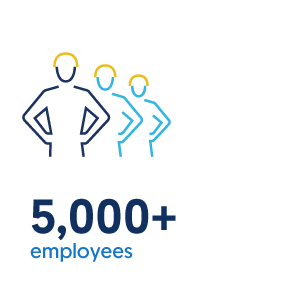
The decisive factor in a company’s success is the quality of the organisation and the employees. The ingredients for a good relationship between the ERIKS group and its 4,650 or more employees are a clear strategy with achievable but challenging targets, open and honest labour relations and competitive employment terms and fringe benefits. This includes offering them good opportunities for self-development.
The Human Resources policy agreed at group level is translated into concrete plans of action at cluster level.
We expect our employees to contribute actively to achieving the necessary growth and to demonstrate a high degree of personal responsibility.
Efficient operational management
Management is devoting undivided attention to administrative and physical logistics. The group has invested in advanced systems and accommodation appropriate to its operations and will continue to do so.
Advanced business information system
The objective is that all the companies within a cluster should utilise one and the same business information system (one cluster – one system). The group’s express preference is for the SAP business information system that has been implemented in the ERIKS Netherlands and ERIKS Belgium clusters. A template has now been developed to provide functional support for the twin business model. In principle, this template will be introduced in all Benelux branches in the next two years.
In accordance with policy, within each other cluster one identical business information system is used. The functionalities of the system are to be expanded. The business information systems in some clusters will have to be modernised in the coming years.
Taking into account all the above factors, plans will be developed to implement these modernisations. ERIKS will also invest in cross-cluster systems in the coming years.
Physical logistics
In physical logistics, a distinction is made between bulk (for all clusters), cluster and branch level warehousing. The ideal split of these three areas will always depend on developments in the distribution channel. All companies in the group conduct an annual review to establish whether our operational management could be improved by making adjustments to our accommodation and logistics structures.
Synergy
Our group companies work together wherever there is potential synergy. International Product Managers, specially appointed for this purpose, are actively involved in and jointly responsible for:
- the coordination and composition of the range of products
- maintaining relationships with existing and potential manufacturers
- monitoring the level of know-how and transfer of knowledge
- the development of logistics services
- identifying new markets and the products and services on offer in these
- tracking market developments
- listing candidates for acquisition.
Our central Corporate Information Management (CIM) department defines ICT policy and ICT standards for the ERIKS group. The ERIKS group’s financial, treasury and fiscal structures are organised centrally.